Scientific question
How can pyroclast textures, pore structure, and mineral chemistry be quantified to help reconstruct the eruptive history of the 1817 Kawah Ijen eruption?
Why it matters
The measured textural and chemical characteristics connect to reconstruction of eruptive history for the 1817 Kawah Ijen eruption.
Data and materials
- Pyroclastic micro-CT volumes
- Volcanic clasts
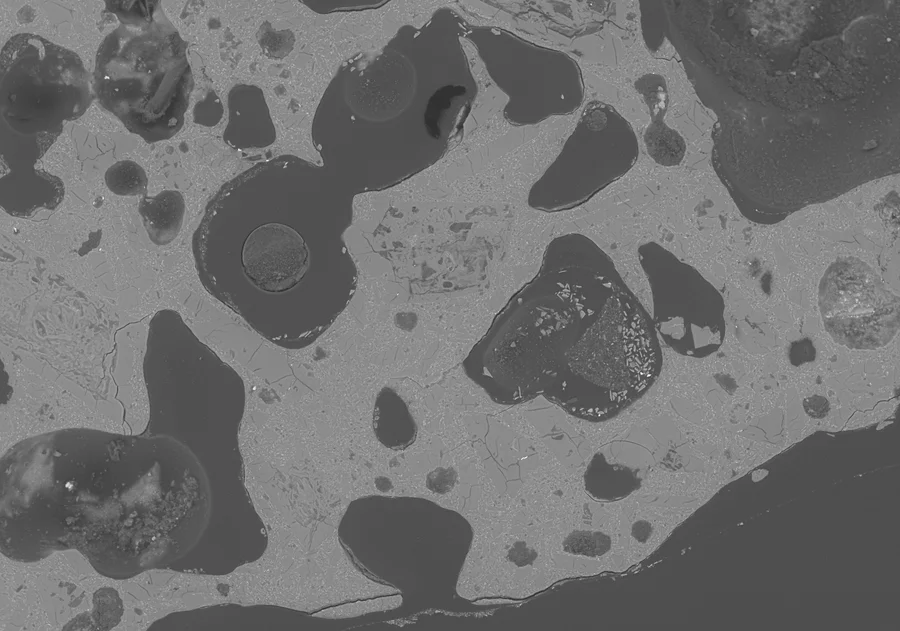
- 2D thin-section imagery
- Electron microprobe data
- Scanning electron microscope data
- Materials associated with the 1817 Kawah Ijen eruption
Methods
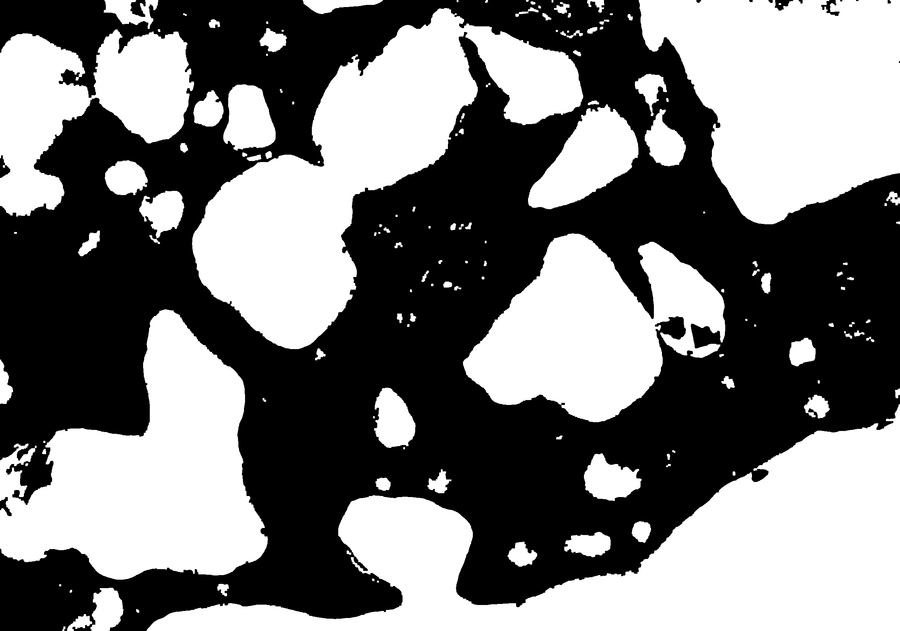
- U-Net-based deep-learning segmentation for 3D pore-space identification
- Stereometric analysis and automated vesicle analysis
- Dragonfly for volumetric imaging workflows
- OpenPNM for pore-network analysis
- Porosity, permeability, pore-connectivity, and anisotropy analysis
- Mineral-chemistry integration and fractionation interpretation
- Pressure-temperature constraint analysis
My contribution
- Conduct computational volcanology research on pyroclastic micro-CT volumes
- Train and evaluate U-Net-based deep-learning models for 3D pore-space segmentation
- Built PyRO-FOAMS, a Python-based stereometric analysis program inspired by Shea et al. (2010)
- Used Dragonfly and OpenPNM to quantify porosity, permeability, pore connectivity, and anisotropy
- Integrated electron microprobe and scanning electron microscope data with textural observations
Current results
The work enables quantitative analysis of connected pore networks, porosity, permeability, pore connectivity, anisotropy, vesicularity, and eruption-related textural characteristics.
Research outputs
We are still working on bridging the physical and chemical results, but our big product from this is PyRo-FOAMS, successor to Thomas Shea’s FOAMS program.